
How to Use Arborvitae in Landscaping: Ideas, Spacing & Top Varieties
Published: November 19, 2025 | Updated: May 5, 2026
Whether you're planning a privacy screen, a foundation planting, or just want year-round evergreen structure, arborvitae is one of the hardest-working plants in the landscape. These reliable workhorses (also sold as Thuja) are among the most popular evergreens in American landscaping, and it's easy to see why.
You've probably seen the most commonly planted varieties, Green Giant and Emerald Green, lining yards throughout your neighborhood. But did you know there are so many more options beyond these two staples? These lesser-known varieties offer different widths, shapes, colors, and even better resistance to wind burn!
All the photos in this article are real and were taken by me, sourced directly from reputable nurseries and growers, or carefully chosen from trusted stock libraries. No AI-generated images here, ever.
In this guide, we'll explore arborvitae landscaping ideas, cover spacing so your plants grow in beautifully, and look at several different varieties to find the best fit for your yard. But first, let's cover a few care basics so your arborvitae landscaping thrives for years to come.
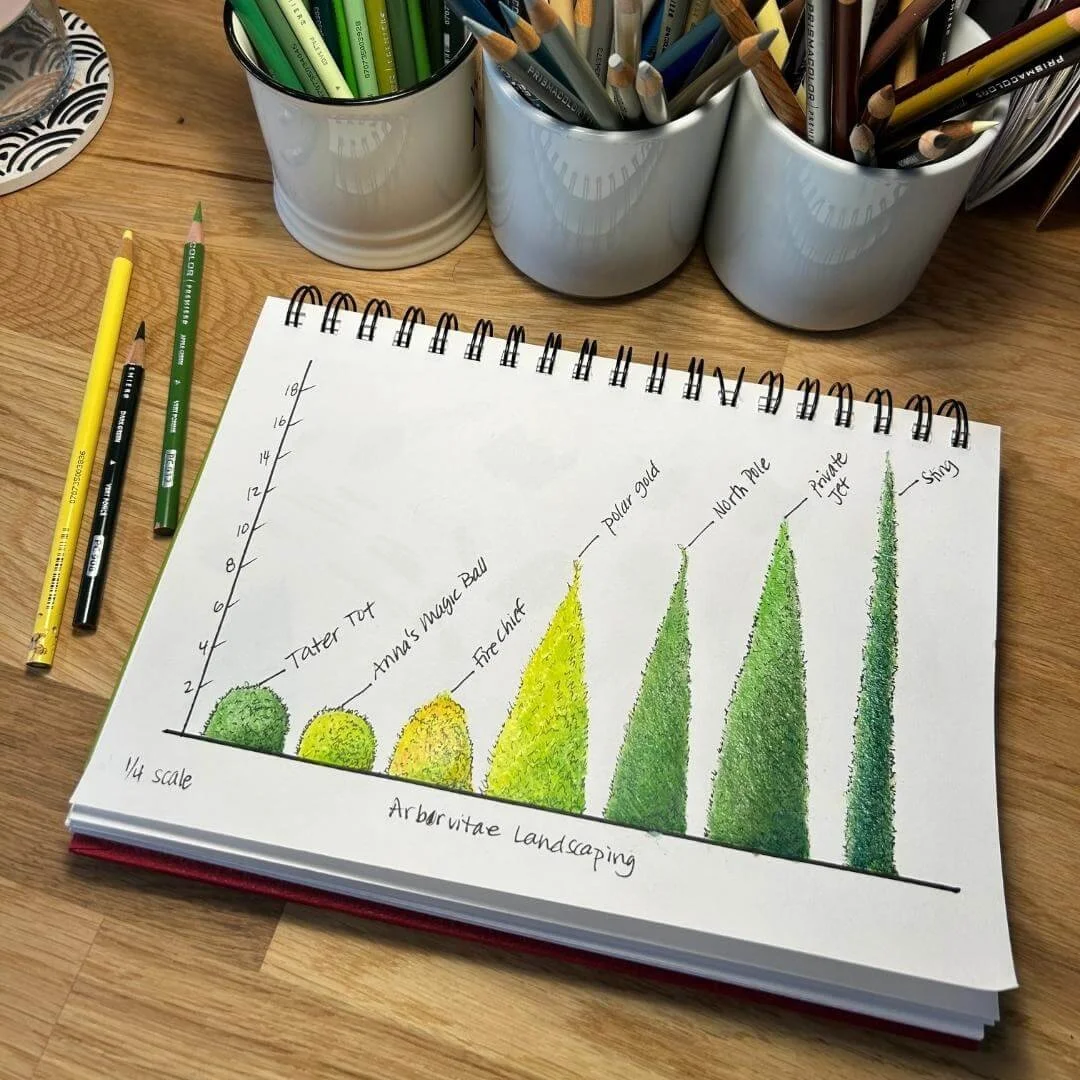
Arborvitae landscaping comes in many different shapes and sizes. Image © Plant and Bloom Design Studio
This post contains affiliate links, marked with an asterisk (*).
Planting & Care Basics for Arborvitae
Arborvitae thrive in full sun where they receive 6 or more hours of direct sunlight daily. They can get by with part shade (3-4 hours), but they won't be quite as full and lush. Full shade is a definite no, because you will end up with thin, scraggly needles that leave you wishing you'd chosen a different spot. If your yard leans more shady, check out my guide to shrubs for shade.
They transplant easily and grow in a wide range of hardiness zones, from Zone 3 to Zone 9, with specific zones listed for each variety below. But here's the catch that trips people up: they need consistent moisture. Even after they're established, arborvitae need regular drinks.
If Mother Nature isn't cooperating with soaking rainfall, you'll need to step in and water deeply to reach the entire root ball. Setting up soaker hoses or drip irrigation will make your life so much easier, especially if you're investing in a whole yard's worth of these beauties. Not sure which watering system is right for you? Check out my guide on soaker hose vs. drip irrigation to find the best fit for your landscape.
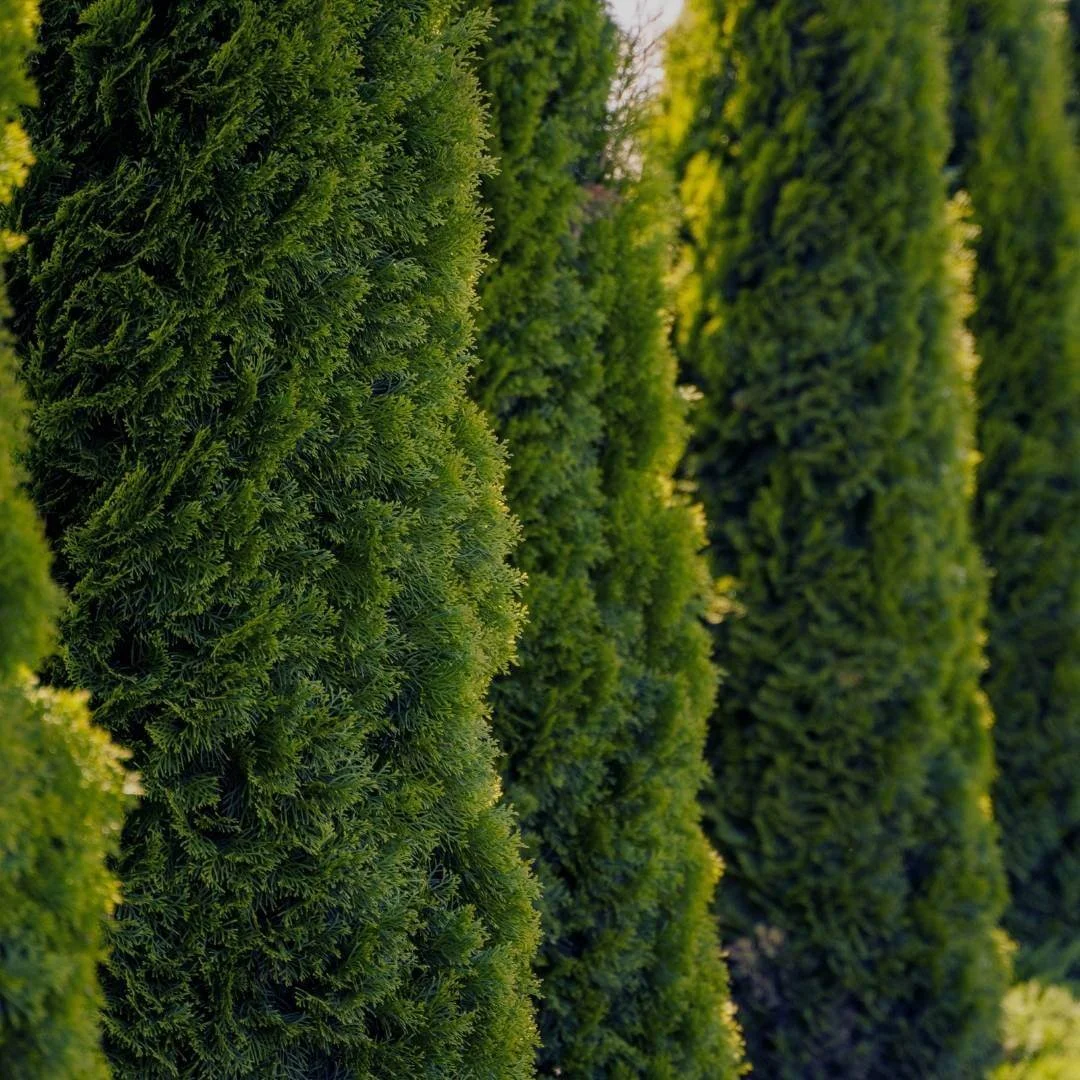
Consistent moisture is the secret behind that lush, rich green color. Don't let your arborvitae dry out! Image credit @Volodymyr Shtun
The other thing to know? Arborvitae are not fans of harsh winter weather. Drying winds, heavy snow, and ice can damage them, so skip the windswept, exposed sites. Keep them well-watered heading into fall so the needles stay hydrated and can better fend off winter damage.
You can protect young plants with burlap wrapping* and brush off heavy snow when possible. If you spot brown branches come spring, don't panic! Wait for warmer weather, carefully prune out the damaged bits, then apply a slow-release, balanced fertilizer* to encourage fresh, lush growth.
One quick note: don't confuse winter damage (which shows up in spring) with the normal browning of inner needles in fall. That's just natural shedding that all evergreens do as they drop their oldest interior needles.
One more important thing to keep in mind: arborvitae are not deer resistant. In fact, they're a favorite snack for deer, especially in winter when food is scarce. You may have seen Green Giant arborvitae marketed as deer resistant, and while deer do tend to browse it less than other varieties, a truly hungry deer will still take a bite. When food is scarce, no plant is completely safe.
If deer are regular visitors to your yard, protecting your plants with deer netting* or fencing can help, but honestly, if deer pressure is heavy in your area, choosing a different plant altogether may be the smarter route. Check out my article on deer resistant plants for beautiful alternatives that hold their own against hungry deer.
A Word About Spacing: Throughout this list, I've mentioned "on center" spacing for each plant. This means measuring from the center of one plant to the center of the next, not edge to edge. Want that professionally landscaped look? Grab your tape measure and plot your spacing precisely. It makes all the difference!
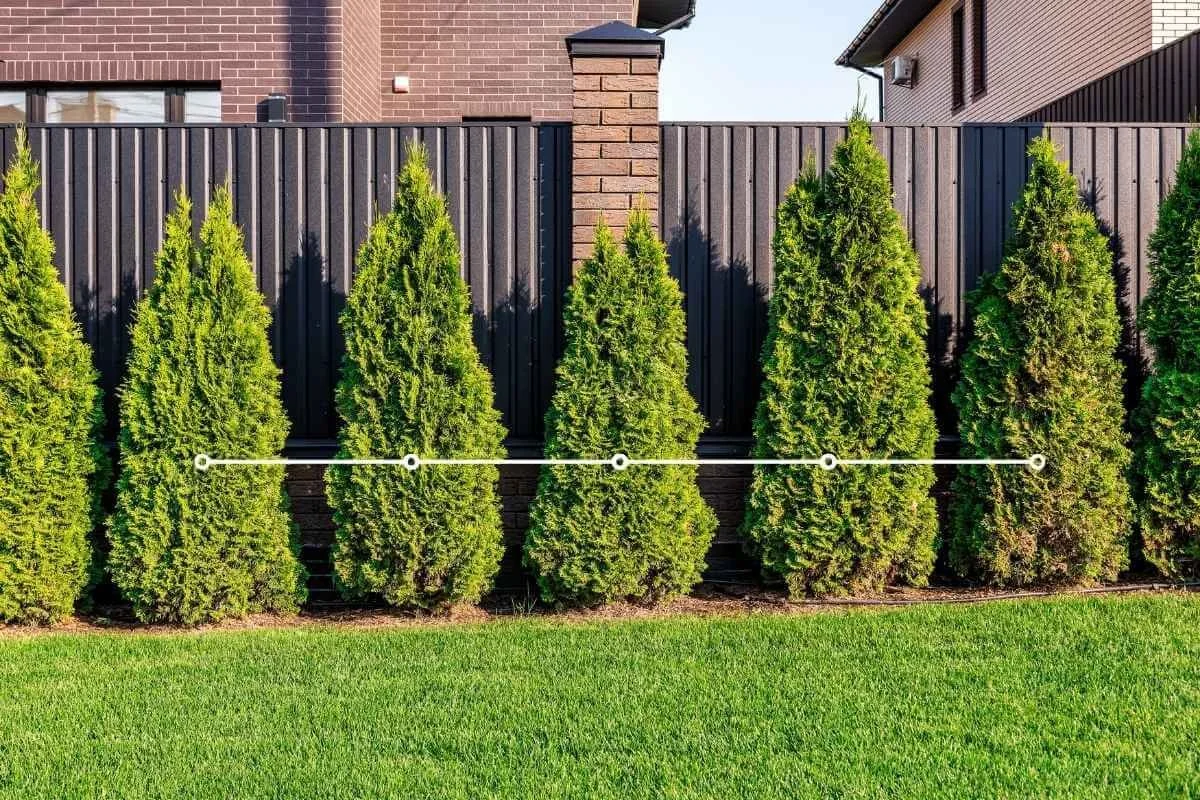
“On center” spacing is the distance from the center of one plant to the center of the next plant.
Arborvitae Varieties for Every Landscape
Green Giant Arborvitae
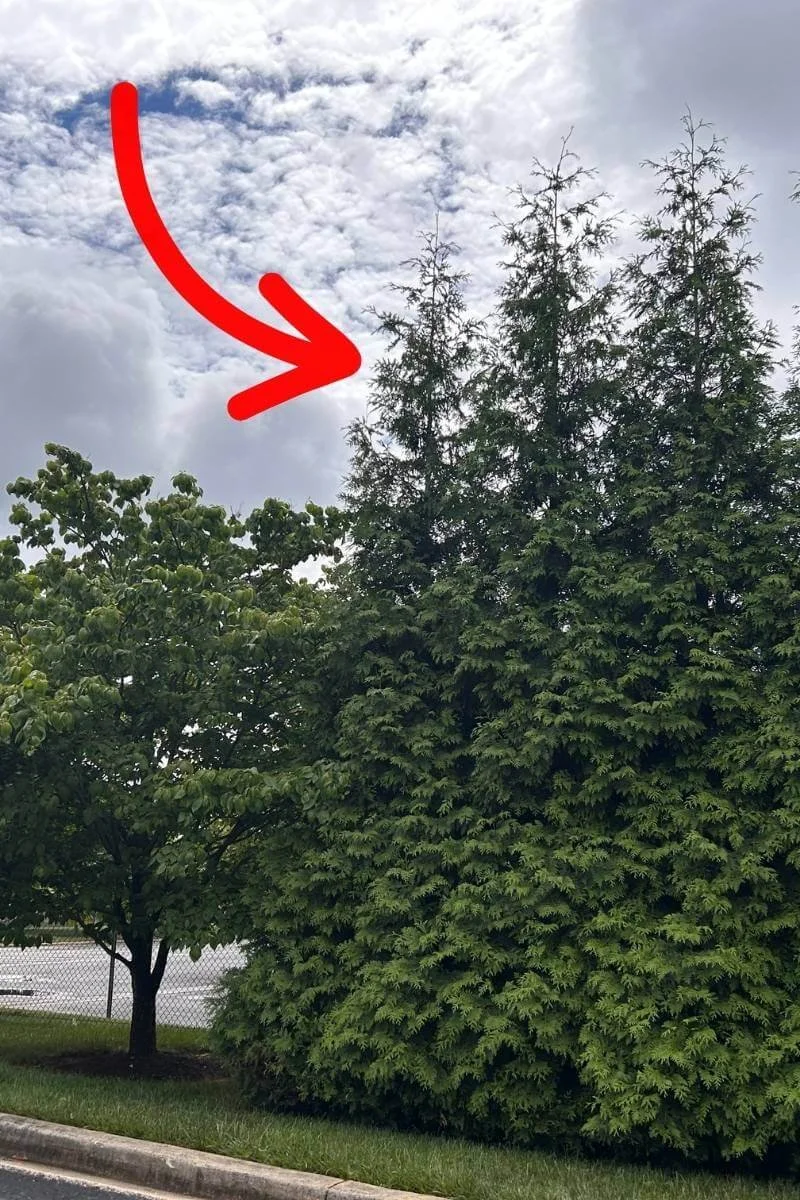
Always plan for mature size! This Green Giant arborvitae is completely dwarfing the small tree beside it. Image © Plant and Bloom Design Studio
What does it say about human nature that this is probably the #1 requested plant I encounter? Maybe that we don't particularly like our neighbors and want to screen them out as quickly as possible! 😜 The questions I hear most often: "Can I grow Green Giants? Do I have enough room? Do they really grow that fast?"
Yes, these are extremely fast-growing trees. In optimal conditions, they shoot up 3-5 feet per year and will eventually reach 30-50 feet tall and 12-15 feet wide. The caveat? They really do grow that tall, so you need to plan for their enormous mature size.
They work wonderfully on large suburban lots, especially around newly constructed homes that need privacy and greenery fast. They're also excellent for creating a sound buffer if you have traffic noise and adequate space. On the flip side, I've seen entire small to medium backyards in urban areas planted with a perimeter of these giants, and the effect is claustrophobic. They create a towering wall that makes you feel boxed in.
One thing worth noting: despite being marketed as deer resistant, Green Giant can still get browsed by a hungry deer and arborvitae are slow to regrow damaged foliage. Prevention is worth the effort, so be sure to check the care basics section above for tips.
If you have the space and need quick screening, these are fantastic. If not, there are better choices on this list, starting with the Full Speed a Hedge® ‘American Pillar’ arborvitae.
Landscaping Uses:
Fast-growing screening for large properties
Privacy hedge along property lines
Sound barrier for traffic noise
Common Name: Green Giant Arborvitae
Botanical Name: Thuja plicata x standishii 'Green Giant'
Zones: 5-8
Size: 30-50 feet high and 12-15 feet wide
Spacing: 5-10 feet on center
Shop Green Giant Arborvitae → Fast Growing Trees* | Nature Hills Nursery*
Emerald Green Arborvitae
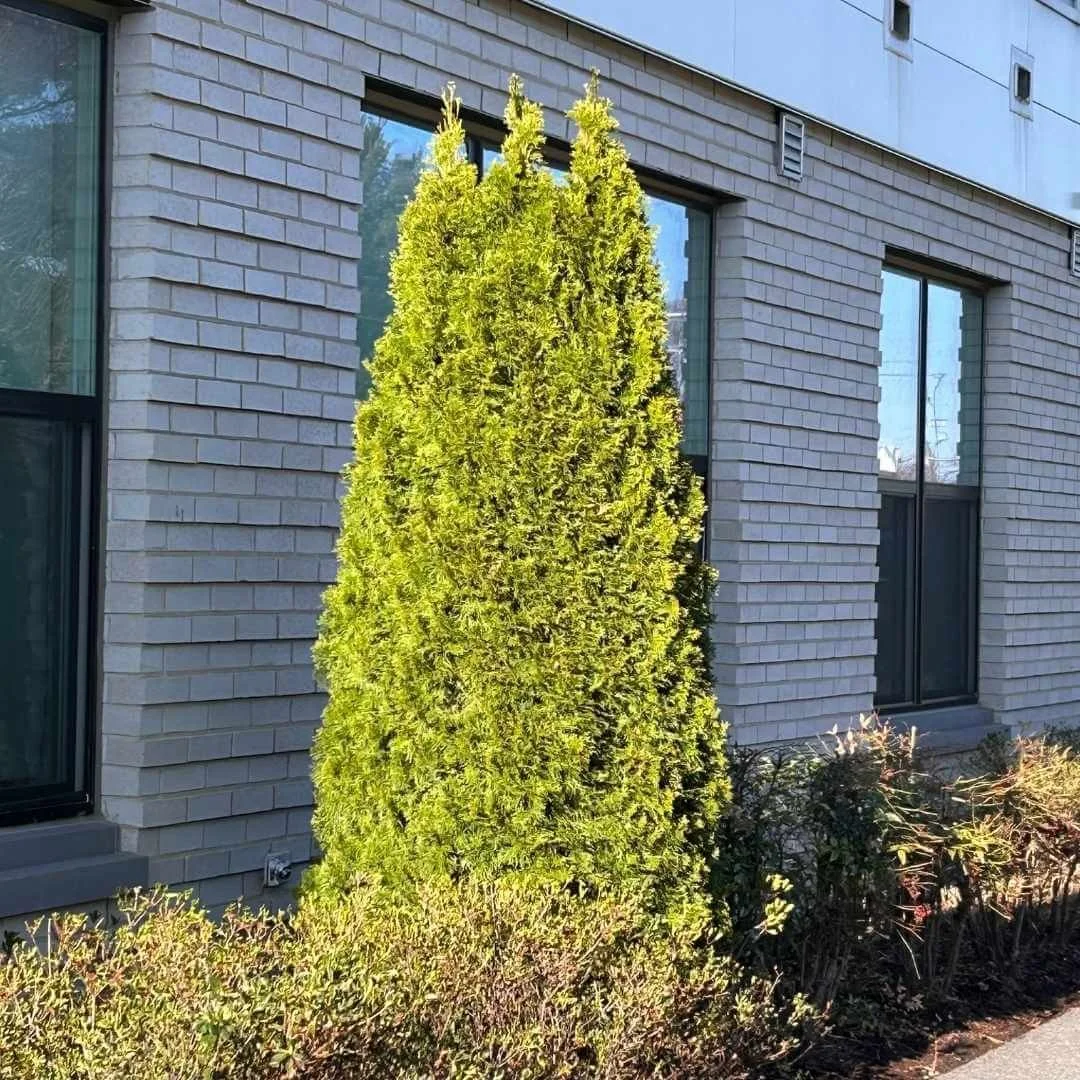
Emerald Green arborvitae earns its keep in winter, holding its rich green color and giving this border real structure when everything else has gone dormant. Image © Plant and Bloom Design Studio
Emerald Green has long been considered a better alternative to Green Giant for those without tons of space, thanks to its compact, columnar shape. It’s ideal for hiding utility boxes, AC units, or blocking unsightly views like a neighbor's shed. This slow-growing variety is a nursery staple and workhorse in the landscaping industry, yet it gets a surprising amount of hate.
Why? Because they're frequently planted in large numbers as a privacy screen in open, exposed landscapes where they struggle. Make sure they have some protection from harsh elements, and remember they need supplemental moisture.
These plants are still dependable performers that will be around for years, but if you're considering Emerald Green, also check out the Private Jet arborvitae further down on this list. It grows faster and might work better for your needs.
Landscaping Uses:
Creates a narrow, elegant privacy screen without taking up much yard space
Perfect for lining property boundaries, driveways, or walkways for a polished look
Add a strong vertical accent in garden beds, mixed borders, or foundation plantings
Common Name: Emerald Green Arborvitae
Botanical Name: Thuja occidentalis 'Smaragd'
Zones: 3-8
Size: 10-15 feet high and 3-4 feet wide
Spacing: 3-4 feet on center for a hedge or privacy screen, 5 feet on center for an individual look
Shop Emerald Green Arborvitae → Fast Growing Trees* | Nature Hills Nursery*
Full Speed a Hedge® ‘American Pillar’ Arborvitae
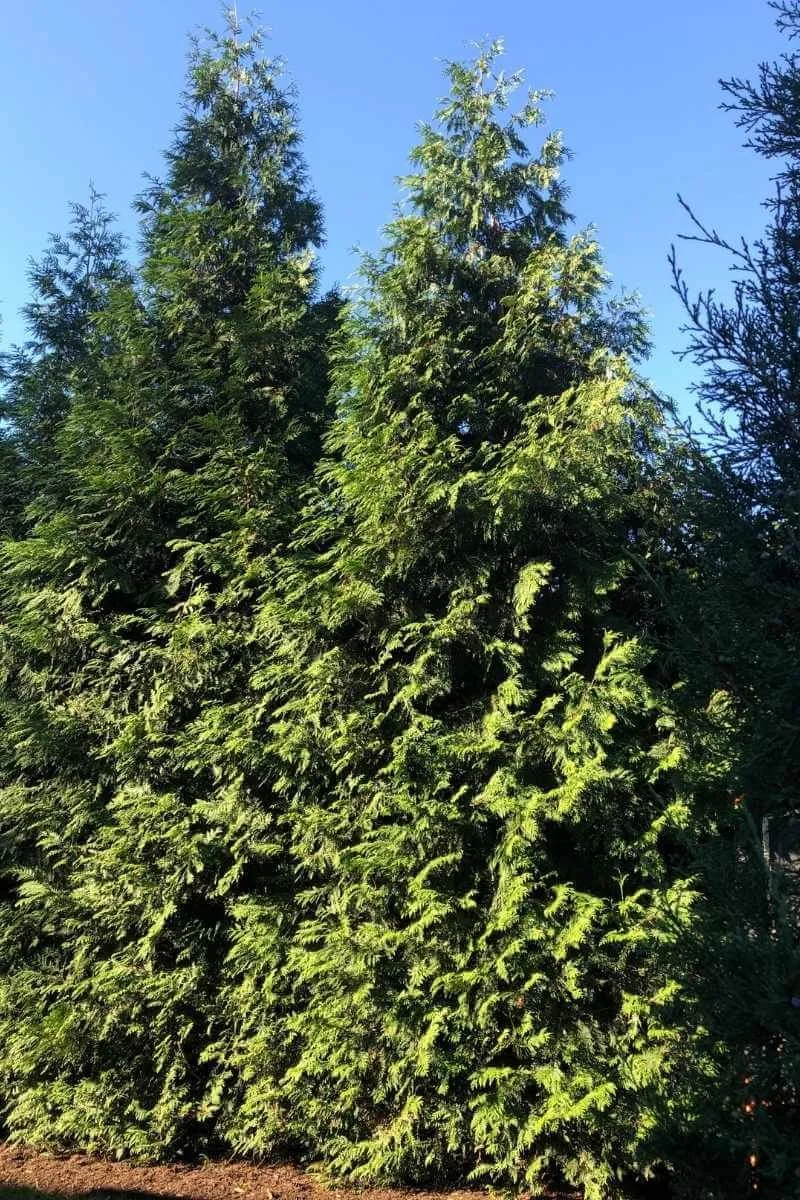
Full Speed a Hedge® arborvitae landscaping offers the same screening as Green Giant with a slimmer profile, making it perfect for smaller yards and urban spaces. Image credit @ Plant and Bloom Design Studio
Full Speed a Hedge is a great alternative to Green Giant for urban spaces and small yards. This dense, versatile screening plant is narrower and slightly shorter than Green Giant, helping you to avoid that claustrophobic feeling.
It forms a thick evergreen screen and grows amazingly fast (up to 3 feet per year in ideal conditions) while offering excellent wind and cold resistance.
Just like Green Giant, consider the mature height before planting, but you'll appreciate the narrower profile. Bonus: it thrives in colder zones than Green Giant.
Landscaping Uses:
Creates a tall privacy screen with minimal width
Ideal for formal hedges, fence lines, property lines, or driveway borders
Works well in small yards where a compact, upright screen is needed
Offers year-round evergreen structure for modern or classic landscape designs
Common Name: American Pillar Arborvitae, Full Speed a Hedge Arborvitae
Botanical Name: Thuja occidentalis 'American Pillar'
Zones: 3-8
Size: 25-30 feet high and 4 feet wide
Spacing: 3-4 feet on center
Shop Full Speed a Hedge® American Pillar Arborvitae → Fast Growing Trees* | Nature Hills Nursery*
Private Jet™ Arborvitae
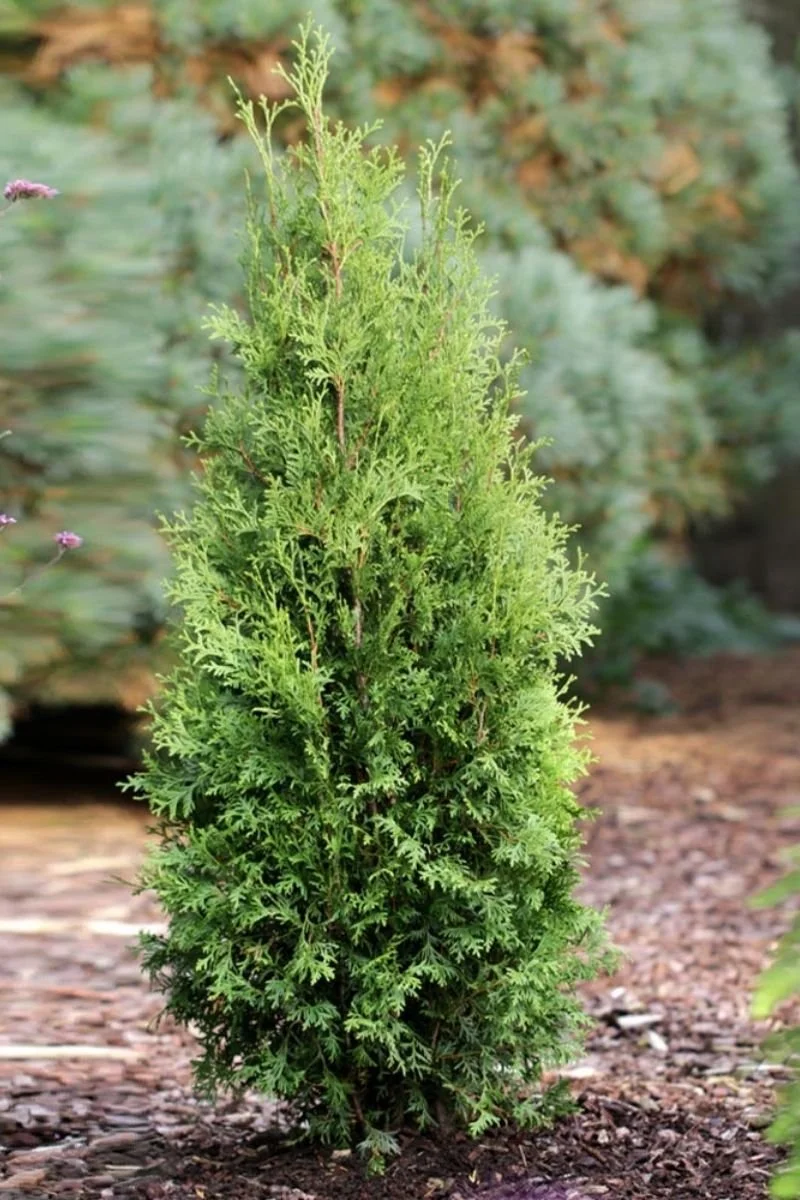
Private Jet™ arborvitae is quickly becoming the preferred alternative to Emerald Green, thanks to its faster growth rate. Image courtesy of Van Belle Nursery - Bloomin’ Easy.
Why is it called Private Jet? Because it takes off quickly, growing up to 24 inches per year until it reaches 15-20 feet tall. This variety is rapidly becoming a replacement for Emerald Green because it grows faster and gets the job done in half the time. Perfect for smaller yards and urban spaces, it grows tall but maintains a narrow footprint of just 4-5 feet wide. Create a dense privacy hedge faster? We're in!
Landscaping Uses:
Creates a sleek, narrow privacy screen with a small footprint
Ideal for framing entryways, driveways, or garden focal points with vertical structure
Works well along property lines or fence lines for a tidy, uniform look
Hides ugly views
Screens utility boxes and air conditioning units
Provides dependable year-round texture and height for small or narrow garden spaces
Common Name: Private Jet Arborvitae
Botanical Name: Thuja occidentalis 'King of Brabant’
Zones: 3-7
Size: 15-20 feet high x 4-5 feet wide
Spacing: 3-5 feet on center
Shop Private Jet™ Arborvitae → Fast Growing Trees* | Nature Hills Nursery*
Sting® Arborvitae
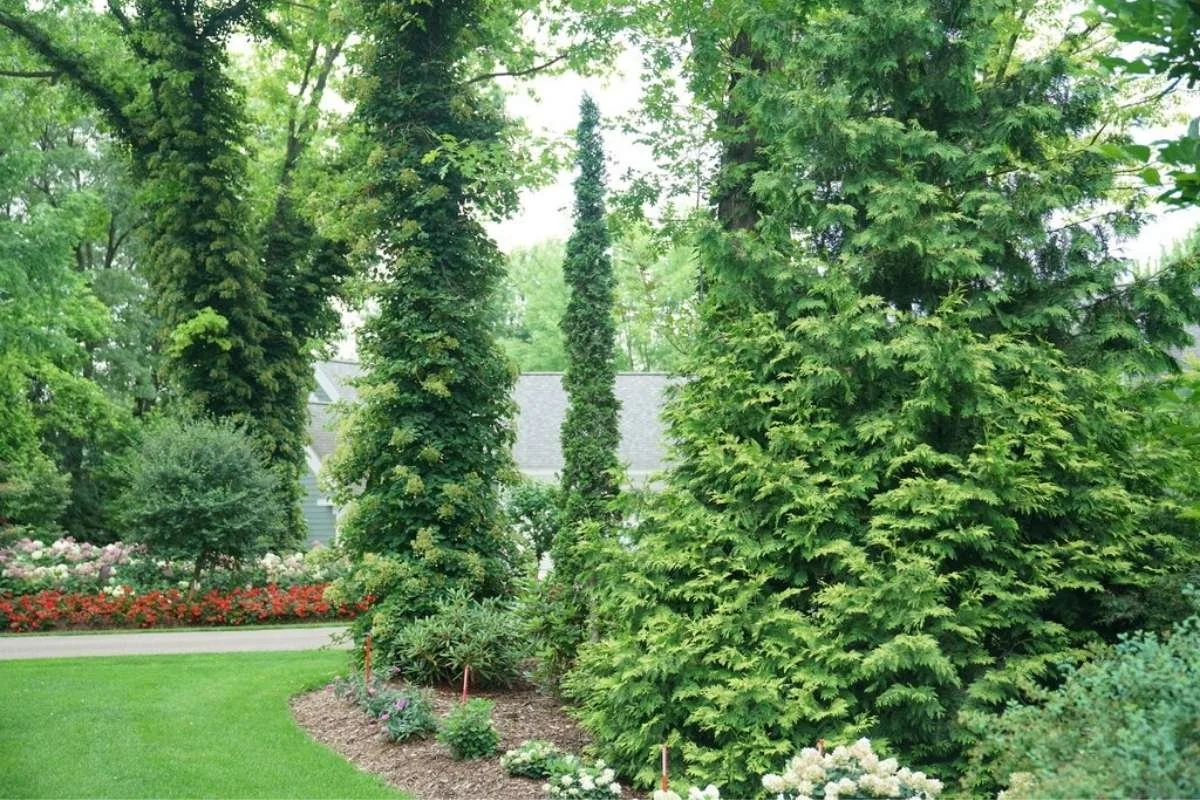
Sting® arborvitae brings vertical interest to the landscape. Image courtesy of Spring Meadow Nursery, Inc.
An interesting, architectural shape that makes a fun vertical accent for anyone who likes a more formal, structured style. This one is tall and skinny, perfect when you need height in tight quarters.
Landscaping Uses:
Adds dramatic vertical accent in foundation plantings or mixed borders
Perfect for tight spaces where height is needed but width is limited
Creates a narrow privacy screen or green "pillar" effect along property lines
Ideal for flanking entryways, gates, or focal points for a formal look
Great for breaking up long fence lines or walls with year-round evergreen structure
Common Name: Sting Arborvitae
Botanical Name: Thuja occidentalis 'SMNTOO'
Zones: 3-8
Size: 15-20 feet high and 1-1.5 feet wide
Spacing: 1-1.5 feet on center
Shop Sting® Arborvitae → Fast Growing Trees* | Nature Hills Nursery*
Cheer Drops® Arborvitae
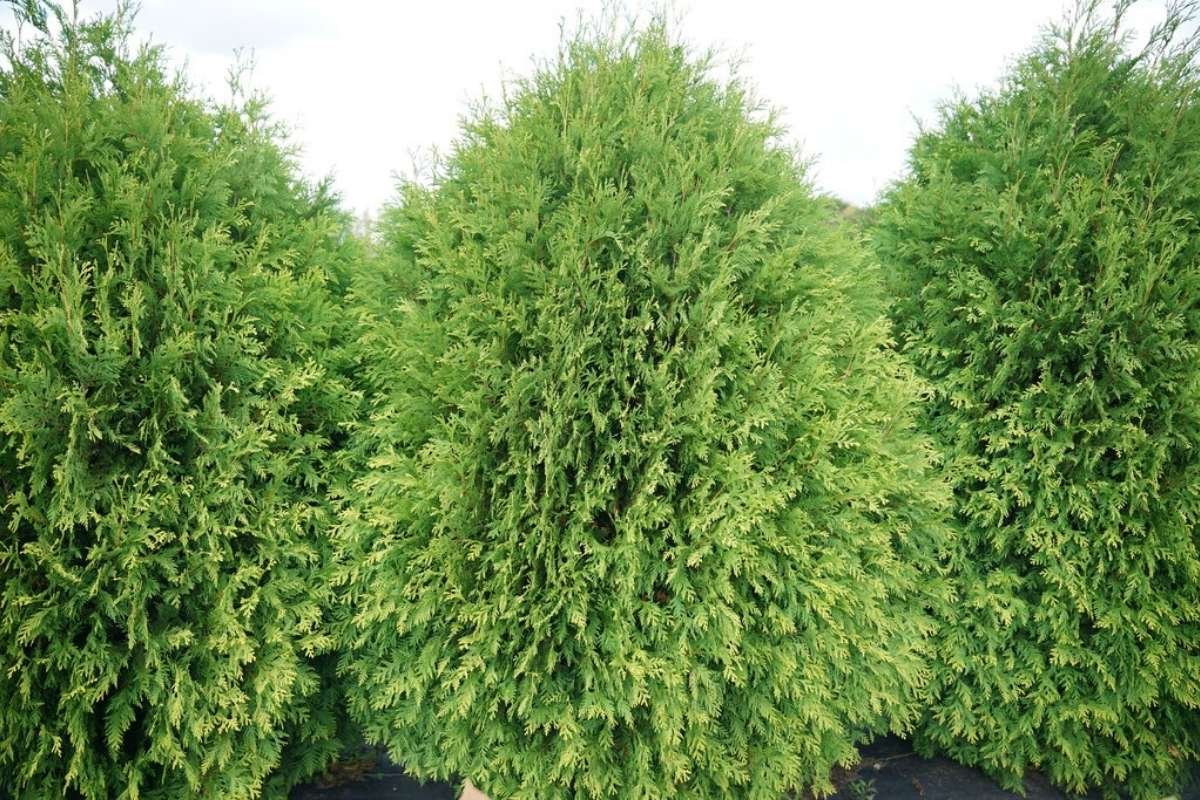
Cheer Drops® arborvitae has soft foliage and a tidy, tear-drop shaped form. Image courtesy of Spring Meadow Nursery, Inc.
I have to admit, I love this plant! It has a soft, interesting look and does a better job in many instances at lining a boundary and creating a privacy screen than Emerald Green, though it's not quite as narrow.
No shaping needed, this beauty keeps its handsome teardrop shape and looks architecturally interesting on its own. It brings more varied texture to your backyard arborvitae landscaping. Plus, it grows in Zone 3, which many arborvitae don't tolerate.
Landscaping Uses:
Creates effective screening in backyards and side yards with unique teardrop form
Provides privacy along property lines with architectural interest
Adds vertical accent to mixed borders with soft texture
Works beautifully in conifer gardens as a specimen plant
Screens air conditioning units and chain linked fencing
Common Name: Cheer Drops Arborvitae
Botanical Name: Thuja occidentalis 'SMNTDGT'
Zones: 3-7
Size: 10-18 feet high and 6-8 feet wide
Spacing: 5-8 feet on center
Shop Cheer Drops® Arborvitae → Nature Hills Nursery* | Home Depot*
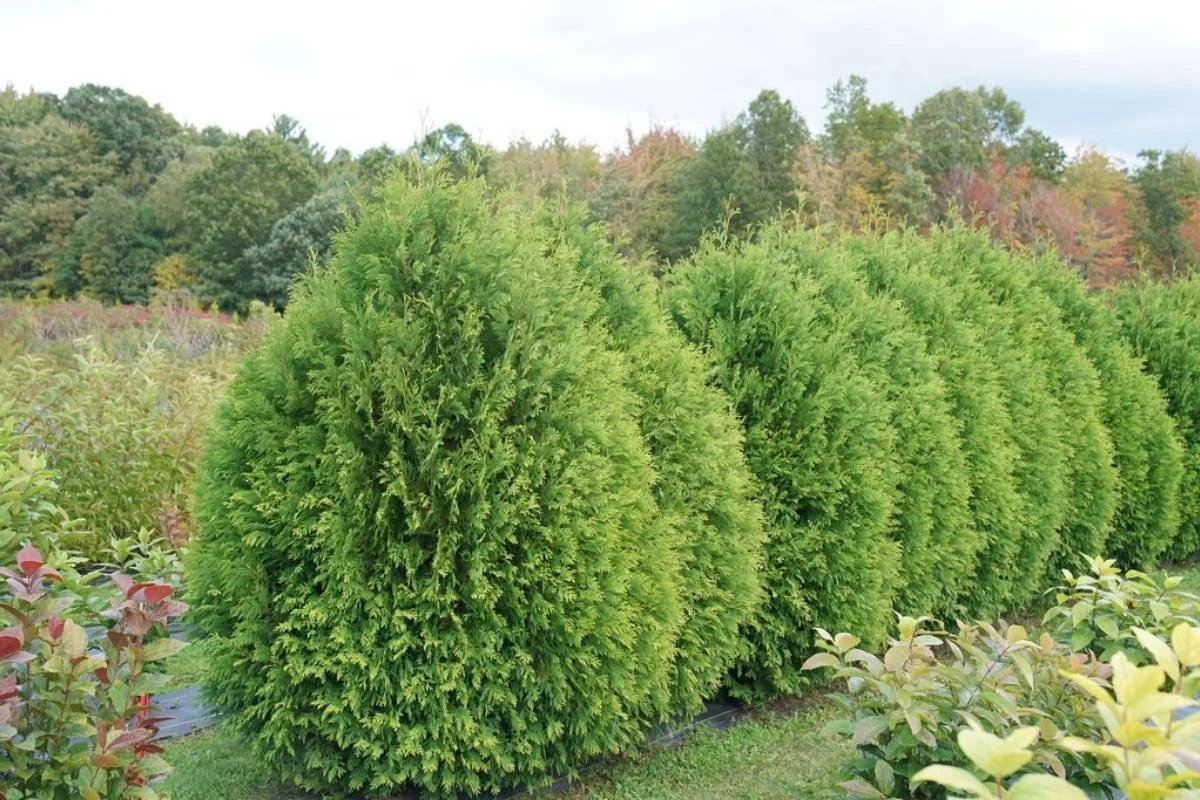
Cheer Drops® makes a nice backyard or side yard privacy screen. Image courtesy of Spring Meadow Nursery, Inc.
Polar Gold® Arborvitae
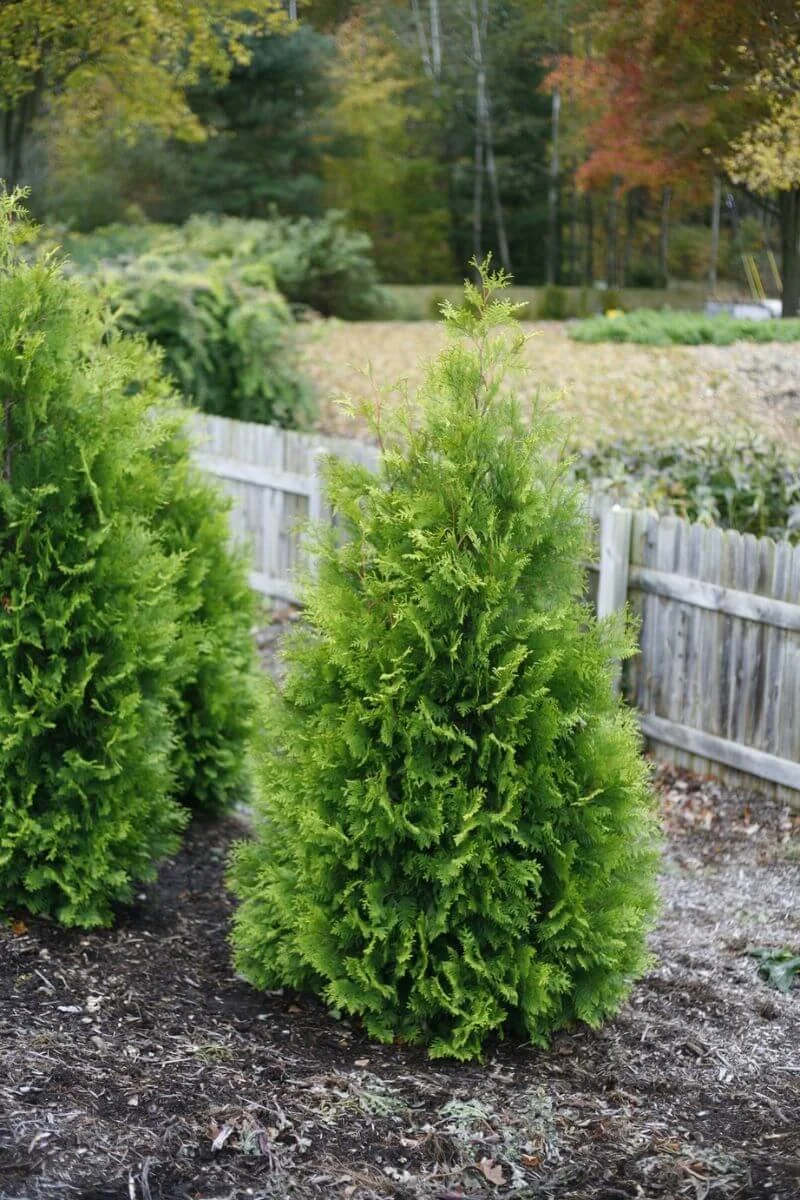
Polar Gold arborvitae delivers vibrant, year-round golden color to brighten any landscape. Image courtesy of Spring Meadow Nursery, Inc.
Polar Gold® arborvitae is a pretty golden variety that offers something different from the standard green. It maintains a relatively narrow footprint while bringing soft texture and a formal shape to your landscaping with arborvitae. It holds a dense, narrow pyramid shape naturally, so no pruning needed, and it grows faster than some other gold varieties on the market.
Landscaping Uses:
Adds bright, year-round golden color to garden beds and borders
Perfect as a privacy screening or dense hedge
Mass planting along property lines or fences
Stand alone specimen plant
Part of a mixed conifer garden
Common Name: Polar Gold Arborvitae
Botanical Name: Thuja occidentalis 'SMTOYB'
Zones: 3-8
Size: 12-15 feet high and 4-6 feet wide
Spacing: 4-6 feet on center
Shop Polar Gold® Arborvitae → Nature Hills Nursery* | Home Depot*
North Pole® Arborvitae
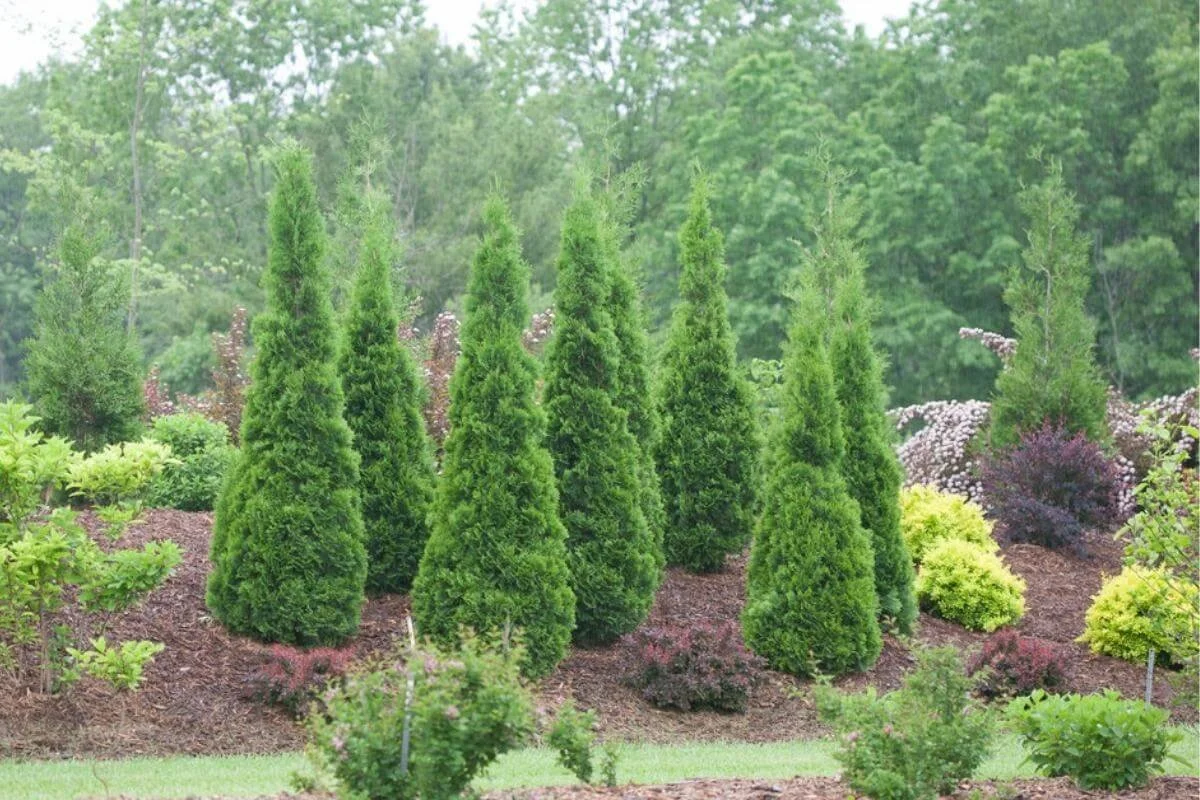
North Pole® arborvitae is a great choice for urban gardens and narrow spaces. Image courtesy of Proven Winners, provenwinners.com
This narrow, upright pyramidal shape is even more slender than Emerald Green at just 3-5 feet wide. It resists winter burn beautifully and is a better choice for small yards, urban gardens, and narrow spaces where you need height without bulk.
Landscaping Uses:
Creates a sleek vertical accent in foundation beds or mixed borders
Perfect for narrow privacy screens along property lines or fences
Ideal for framing entryways, gates, or garden focal points with a clean, upright form
Works well in small yards or tight spaces where height is needed without width
Common Name: North Pole Arborvitae
Botanical Name: Thuja occidentalis 'Art Boe'
Zones: 3-8
Size: 10-15 feet tall and 3-5 feet wide
Spacing: 3-5 feet on center
Shop North Pole® Arborvitae → Fast Growing Trees* | Nature Hills Nursery*
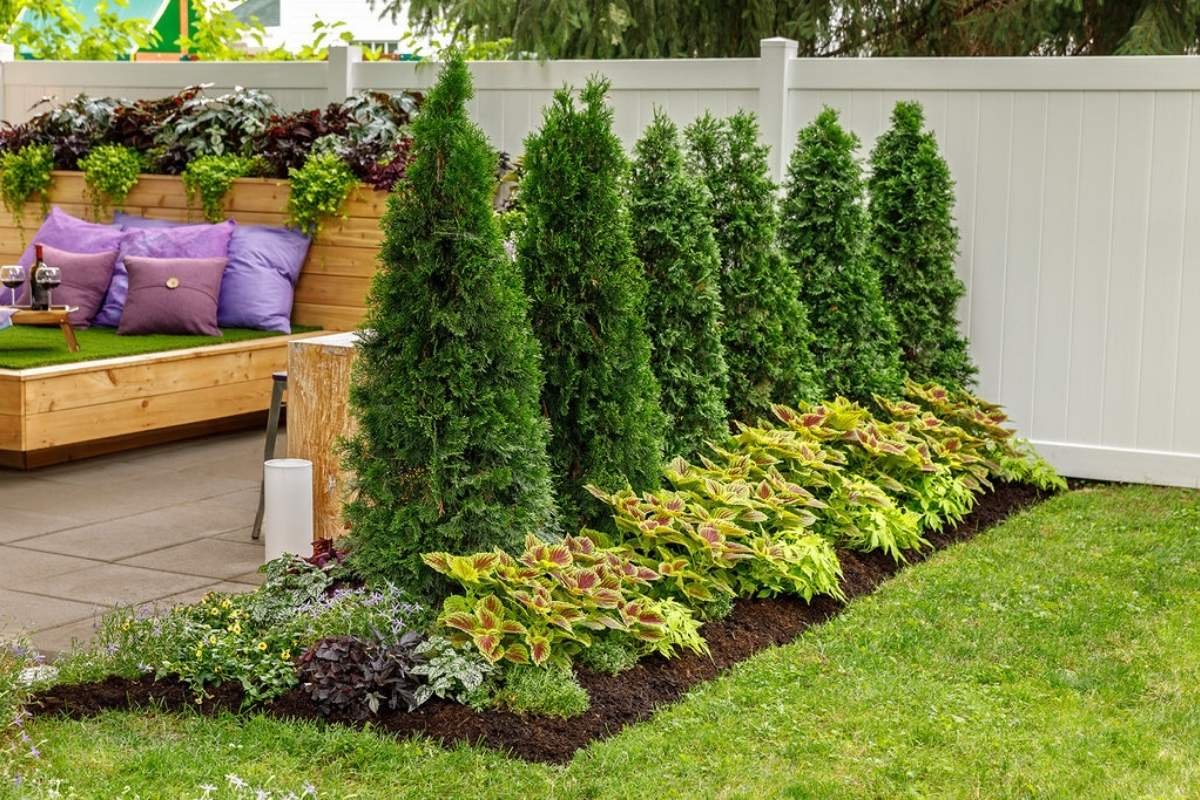
North Pole® arborvitae and colorful annuals define this backyard patio space. Image courtesy of Proven Winners, provenwinners.com
Whip It Good® Arborvitae
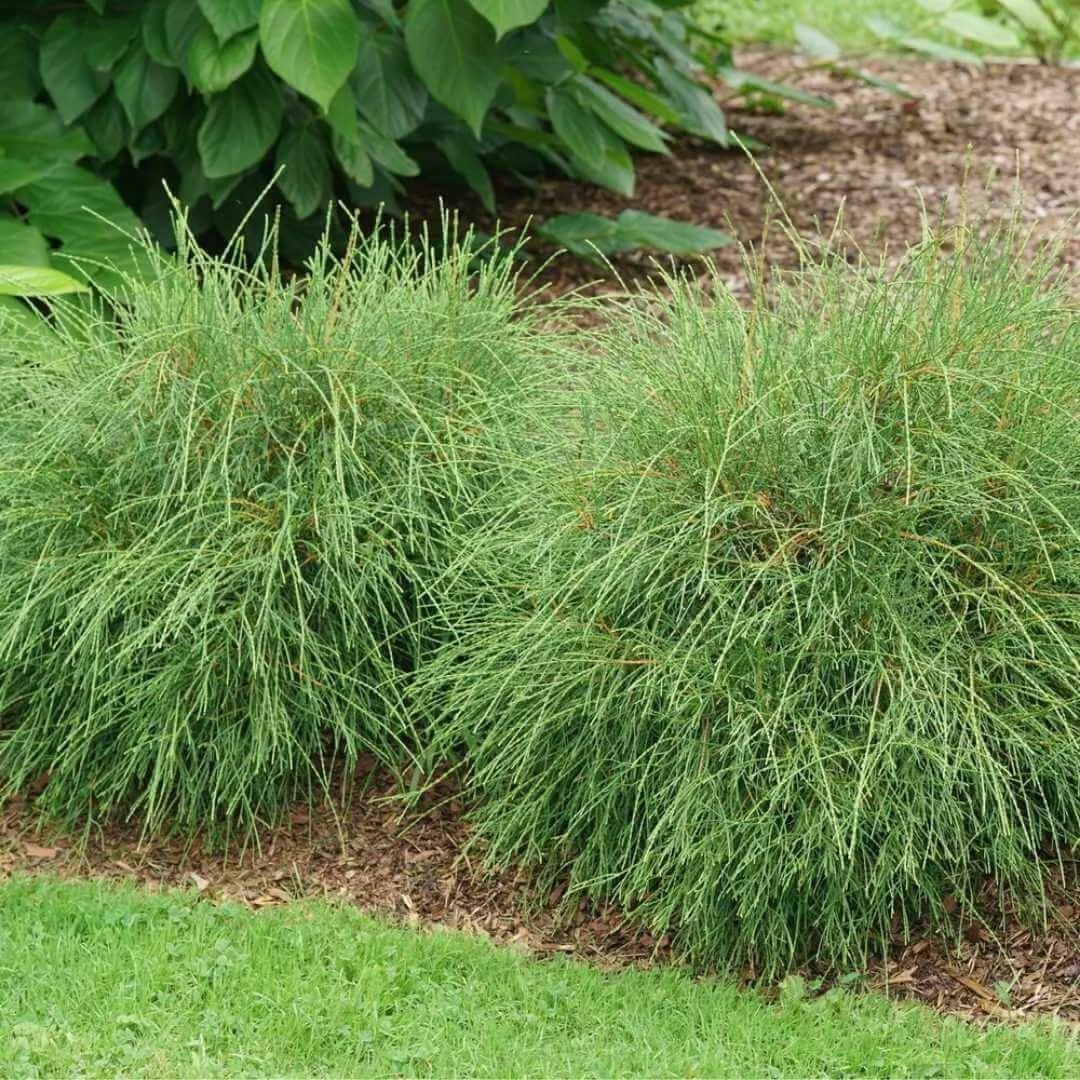
Whip It Good® arborvitae brings a quirky shape and interesting texture to garden beds and borders. Image courtesy of Spring Meadow Nursery, Inc.
This is a brand-new arborvitae that will land in garden centers in 2026, and it's so cool looking! It brings interesting texture to your landscape with long, thin leaves and a whimsical, grass-like appearance. It grows faster and has a nicer shape than the older "Whipcord" variety. A low-maintenance, versatile choice for modern designs.
Landscaping Uses:
Adds unique texture and a flowing, fountain-like form to garden beds and mixed borders
Ideal for softening hard edges around rocks, pathways, or retaining walls
Works beautifully in modern or Asian-inspired landscapes for a sculptural look
Great as a low foundation plant where a distinctive, evergreen mound is needed
Excellent in containers for year-round interest and eye-catching texture
Common Name: Whip It Good Arborvitae
Botanical Name: Thuja occidentalis 'RutThu2'
Zones: 3-9
Size: 3-5 feet high and wide
Spacing: 3-5 feet on center
Shop Whip It Good® Arborvitae → Fast Growing Trees*
Fire Chief™ Arborvitae
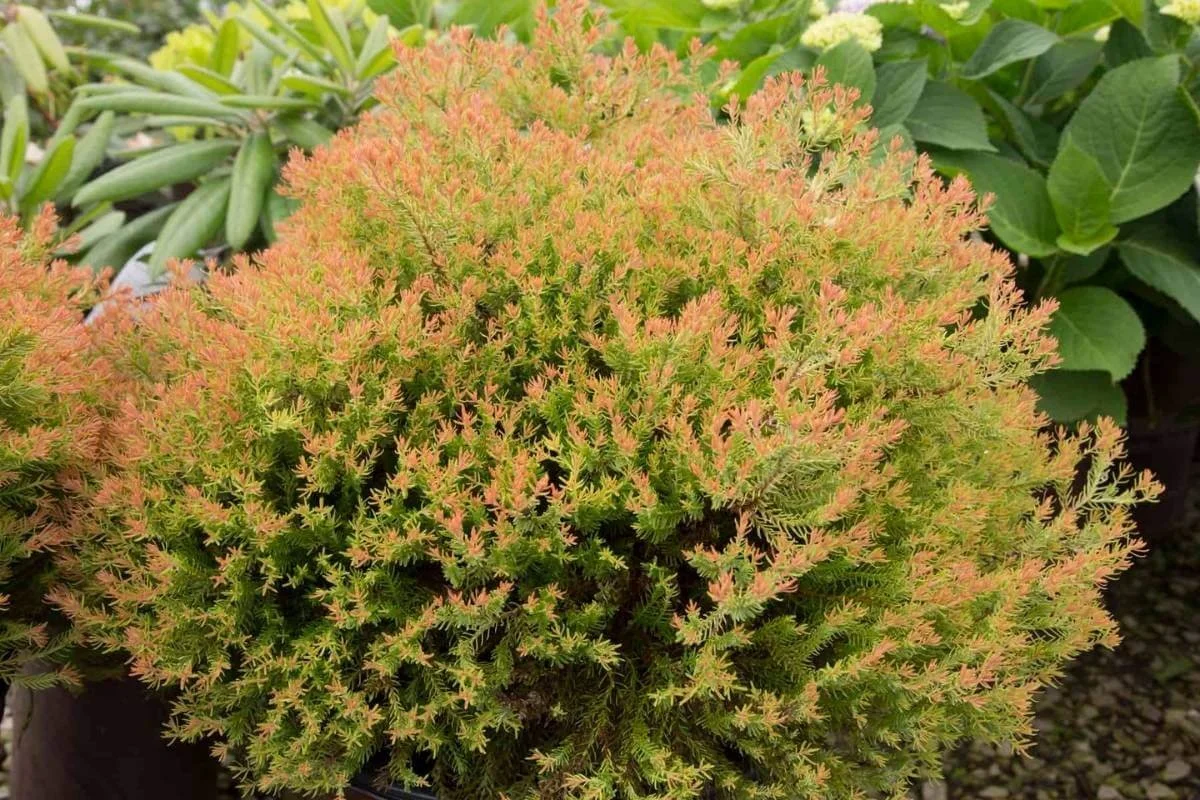
Golden leaves tipped with orange give Fire Chief™ arborvitae its signature glow. Image courtesy of Southern Living Plant Collection.
I love this one for its unique foliage color. Golden leaves are kissed with shades of orange that become more red as autumn approaches. It stays compact and has a strong tolerance to wind burn. I love planting it behind catmint or Russian sage because the colors together are absolutely striking if you want a bold color scheme with your arborvitae shrubs for landscaping.
Landscaping Uses:
Adds vibrant year-round color with red-orange foliage, perfect for brightening borders
Ideal tidy foundation shrub that stays compact without pruning
Works beautifully in mixed plantings to create contrast with dark green or blue evergreens
Excellent in containers or small-space gardens where compact form is needed
Common Name: Fire Chief Arborvitae
Botanical Name: Thuja occidentalis 'Congabe'
Zones: 5-8
Size: 2-4 feet high and wide
Spacing: 3 feet on center for a dense look; 4-5 feet on center for an individual look
Shop Fire Chief™ Arborvitae → Fast Growing Trees* | Nature Hills Nursery*
Anna’s Magic Ball® Arborvitae
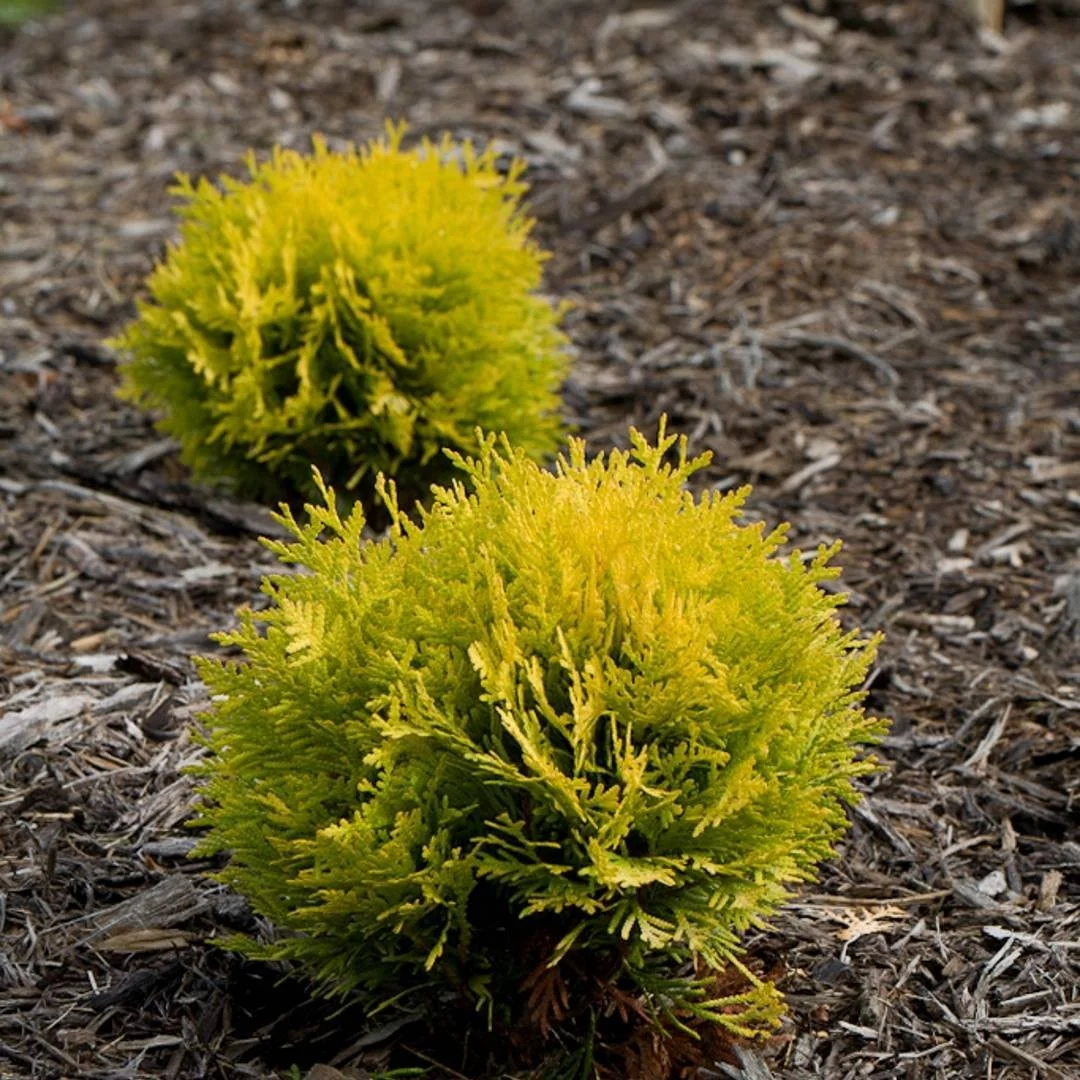
Anna’s Magic Ball® arborvitae glows with bright golden-green foliage and a tidy, year-round globe shape. Image courtesy of Proven Winners, provenwinners.com
This dense, rounded beauty features bright golden-green foliage that literally glows in the garden. The easy-to-grow, globe-shaped form brings year-round structure and is perfect for small spaces and tidy borders. I love seeing a row of Anna's Magic Ball planted in front of smooth hydrangeas to create an elegant, structured edge. It also pairs beautifully along side Double Play Doozie spirea because the golden-green foliage makes a lovely contrast with the spirea's bright purple-red flowers.
Landscaping Uses:
Perfect for adding bright, year-round color to small garden beds and borders
Ideal as a low, tidy foundation plant that won't outgrow its space
Great for lining pathways or edging mixed plantings with neat structure
Works well in townhome gardens and small spaces where compact form is essential
Excellent in containers for pops of evergreen texture on patios or flanking entryways
Common Name: Anna’s Magic Ball Arborvitae
Botanical Name: Thuja occidentalis 'Anna van Vloten'
Zones: 3-8
Size: 2-3 feet high and 3-4 feet wide
Spacing: 3-4 feet on center
Shop Anna’s Magic Ball® Arborvitae → Fast Growing Trees* | Nature Hills Nursery*
Tater Tot® Arborvitae
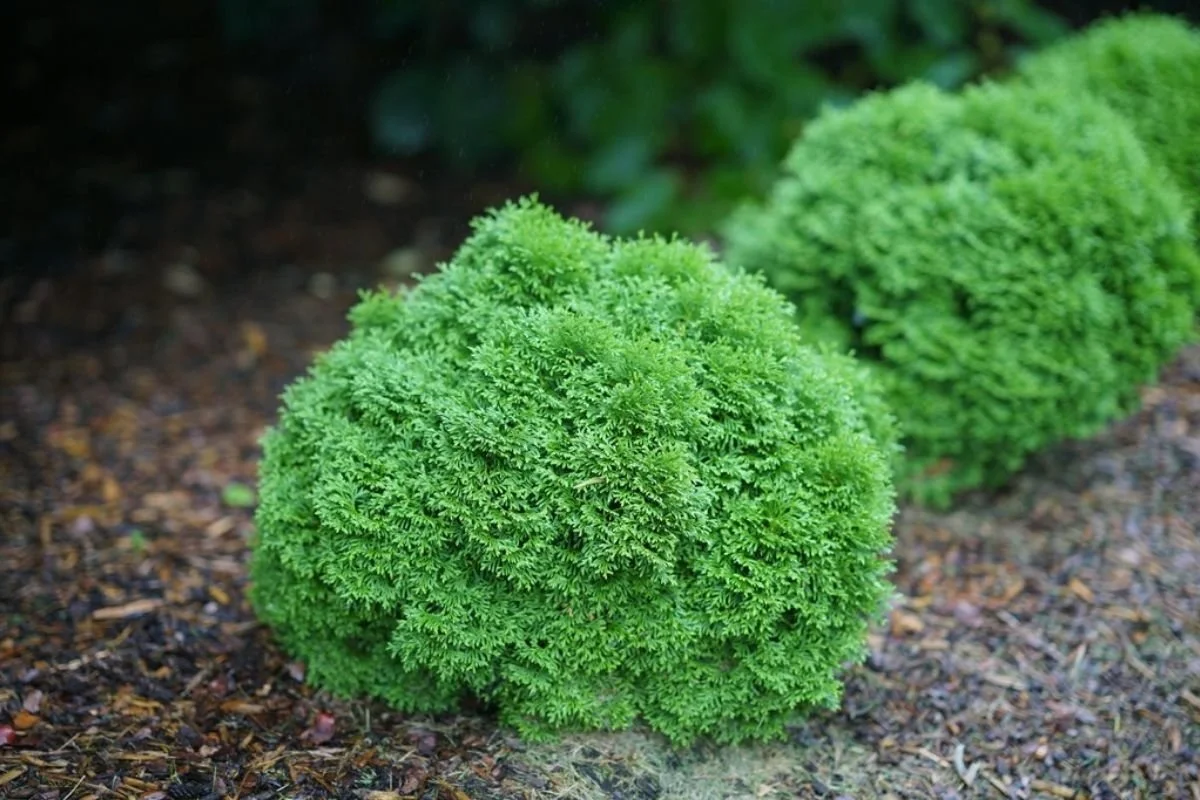
This petite, naturally round arborvitae adds tidy year-round structure, even in shadier spots. Image courtesy of Proven Winners, provenwinners.com
Cute and very useful, this small globe-shaped arborvitae naturally maintains its round form with no pruning needed. It's more shade-tolerant than most arborvitae, making it perfect for bringing structure to the shadier areas of your yard. The green foliage stays dense and tidy year-round.
Landscaping Uses:
Ideal as a small, tidy foundation plant that keeps its shape without pruning
Great for edging pathways or defining borders with consistent structure
Perfect for small gardens or tight spaces where a compact evergreen is needed
Works well in mixed beds to add year-round texture without overwhelming surrounding plants
Excellent in containers for a neat, low-maintenance evergreen accent
Common Name: Tater Tot Arborvitae
Botanical Name: Thuja occidentalis 'SMNTOBAB'
Zones: 3-8
Size: 2-3 feet high and 3-4 feet wide
Spacing: 3-4 feet on center
Shop Tater Tot® Arborvitae → Fast Growing Trees* | Nature Hills Nursery*
Make Your Arborvitae Landscaping Dreams a Reality
There you have it! Several exceptional alternatives to the standard Emerald Green and Green Giant that can bring new shapes, sizes, colors, and textures to your arborvitae landscaping. Whether you're working with a sprawling suburban lot or a cozy urban garden, there's an arborvitae variety perfectly suited to your space.
Remember, success with arborvitae comes down to choosing the right variety for your conditions and committing to consistent watering, especially during their first few years and heading into winter. With proper care and smart placement, these evergreen beauties will reward you with year-round structure and privacy that looks professionally designed.
Helpful Resources:
USDA Zone Finder - Find your hardiness zone
US Drought Monitor - Check current drought conditions
How to Water Your Plants - My complete watering guide
Ask Extension - Real gardening answers from extension experts
Frequently Asked Questions About Arborvitae Landscaping
What is the best arborvitae for landscaping? It really depends on your space, your zone, and what you're trying to achieve. The good news is there are excellent options for every situation, from narrow columnar varieties perfect for tight spaces to fast-growing giants built for large properties. I've covered the top varieties in detail above, including mature sizes and spacing, so you can find the best match for your yard.
How far apart should I plant arborvitae for a privacy screen? Spacing varies by variety, and getting it right makes a big difference in how your hedge looks at maturity. I've listed the recommended on-center spacing for each variety in this article. Scroll up to find your variety and you'll have everything you need.
Do arborvitae need a lot of water? More than most people expect! Consistent moisture is actually the number one thing arborvitae need to thrive, and skipping it is the most common reason they fail. Head up to the care basics section for the full scoop on watering, including a tip that makes it much easier to manage.
What is the fastest growing arborvitae for privacy? A couple of varieties on this list can put on some seriously impressive growth each year, and one of them might surprise you. Check out the variety profiles above for growing information, mature sizes, and which ones strike the best balance between speed and manageability.
Can arborvitae grow in shade? They prefer sun, and too much shade will show in the foliage. That said, a few varieties are more forgiving than others. If shade is a challenge in your yard, the variety profiles above will point you in the right direction and be sure to check the care basics section at the top of this article for more on sun requirements and shade alternatives.
How do I protect arborvitae from winter damage? A few simple steps in fall can make a big difference come spring. The care basics section at the top of this article walks through everything from watering practices to burlap wrapping, plus what to do if you spot brown branches after winter.
What arborvitae is better than Emerald Green? Honestly, several! Emerald Green is a classic for good reason, but there are newer varieties that outperform it in some really meaningful ways. Scroll through the variety profiles above and you might find a new favorite.
More Trees and Shrubs Ideas
Follow Plant and Bloom Design Studio for More Gardening Tips and Landscape Design Ideas